Scaling Industrial AI for Real-World Machinery
Key Insights: We helped a global equipment manufacturer move from an early edge AI prototype to a production-ready industrial AI platform by working as an extension of their engineering team, combining technical execution, strategic guidance, and multidisciplinary AI expertise.
About the Client
At Marvik, we’ve had the opportunity to work closely with a global leader in compact equipment and industrial machinery, part of a top-tier multinational industrial group.
The client operates in a highly technical environment, with deep internal expertise in hardware engineering, embedded systems, and low-level chip programming.
Its long-term vision is focused on bringing more autonomy and intelligence into machines, where AI has to work under strict hardware, latency, reliability, and safety constraints across distributed engineering teams in the US and South Korea.
The Challenge
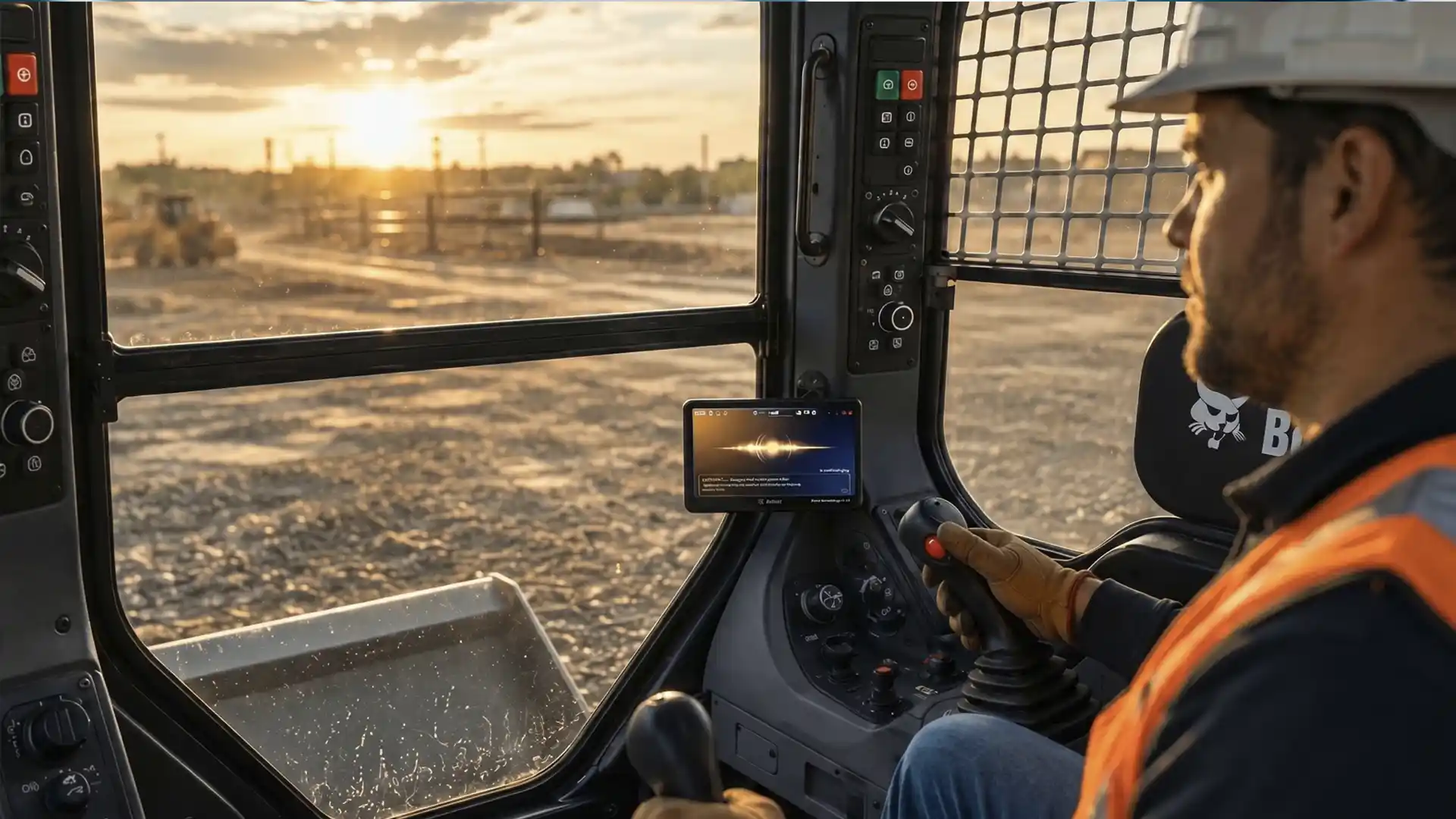
The initiative began with an early AI prototype for job-site machinery, but moving it into production required more than improving the model:
- Physical & Edge Constraints: The system needed to execute directly on real machines under rigid performance, latency, and safety limits.
- Shifting Strategic Priorities: Cross-functional requirements continuously evolved across product, cloud infrastructure, and the client's long-term autonomy vision.
- Hardware Bottlenecks: Physical access to testing machinery was limited, threatening to slow down software validation and integration cycles.
Transitioning from PoC to production demanded a robust technical and operational foundation capable of aligning distributed hardware dependencies, engineering teams, and real-world deployment goals.
At the same time, product priorities kept evolving, and long-term AI initiatives were still taking shape. The client needed more than engineering execution. They needed a partner who could anticipate technical risks and translate shifting business priorities into production decisions.
Marvik’s Approach & Forward-Deployed Engineers Execution
We started by assessing the existing prototype and defining a clear production path across, architecture, deployment, testing, monitoring, and integration.
Rather than executing against a fixed roadmap, we worked alongside the client to continuously define priorities, evaluate trade-offs, identify technical dependencies before they became blockers, and shape the evolution of the platform as new opportunities emerged.
By working embedded alongside engineering and product teams, we maintained short delivery cycles, proactively managed technical risks, and aligned engineering decisions with evolving business priorities.
Onsite presence also became part of the delivery model. Working directly with machines, hardware teams, and technical stakeholders at the client’s US manufacturing hub accelerated decisions, solved practical constraints, and built trust across the organization.
As the relationship grew, the work expanded across several strategic workstreams:
- Production AI deployment: Moving the original prototype toward a reliable architecture for real machine environments.
- Remote updates: Supporting the infrastructure needed to update software and AI components across machines.
- Telemetry and monitoring: Building visibility into model performance, latency, command accuracy, and user interactions.
- Computer vision: Delivering targeted AI capabilities connected to machine interaction and control.
- Data strategy: Supporting the client’s long-term autonomy roadmap across technical and executive stakeholders.
- Product and technical direction: Providing technical guidance across engineering, product, and leadership teams as the platform continued to evolve.
The Results & Impact
- Long-term strategic expansion: What began as a tactical assessment evolved into a long-term collaboration, with our team becoming a trusted partner across multiple strategic AI initiatives.
- Multi-disciplinary team scaling: The team scaled across embedded AI, cloud, data strategy, product delivery, and technical leadership.
- Early production risk mitigation: Identified and resolved hardware licensing, compute limits, and architectural bottlenecks early in the lifecycle.
- Testing continued without full hardware access: Custom simulators helped validate software and AI components while physical machine access was limited.
- Full observability from day one: Built telemetry layers tracking latency, command matching accuracy, and operational usage across machine fleets.
- Stronger technical alignment across regions: We helped connect engineering and executive stakeholders across the US and South Korea through transparent reporting and continuous feedback.
Why This Matters
Deploying AI on physical machinery goes far beyond model accuracy. It requires solving hard real-time constraints while connecting embedded software, cloud infrastructure, and engineering teams into a reliable production system.
This project shows how working as an embedded engineering partner helps organizations move complex AI initiatives from promising prototypes to scalable production platforms.