%20copia.webp)
Building a Career as a Machine Learning Engineer



My name is Lucas, and I currently work as a Machine Learning Engineer, leading AI initiatives for global clients.
My academic background is not the most conventional one for this role. I studied Mechanical Engineering, without formal training in Computer Science or an early specialization in AI. What I did have a strong engineering foundation, a long-standing interest in software, and a willingness to learn through hands-on experience.
Today, I am a Tech Lead at Marvik, a hands on AI consulting firm built for the now. Backed by leading technology partners such us Nvidia and Oracle, we help organizations move from idea to production, fast, safe, and at scale
This article reflects on my career path, the key lessons learned along the way, and the insights I would share with anyone considering a career as a Machine Learning Engineer.
How My Career Started: Mechanical Engineering and Early Programming
I originally trained as a mechanical engineer, but my relationship with software started much earlier. I began coding around the age of 15, not with a career goal in mind, but out of curiosity and enjoyment. I liked building things, experimenting, and tinkering with early programming languages simply because it was fun. At the time, engineering felt like the “serious” path, and programming was just a side interest.
That changed during my master’s thesis in computational mechanics. The work combined numerical simulations, custom code, and data analysis to extract meaningful engineering insights from complex systems. For the first time, I was spending most of my time writing code, analyzing outputs, and reasoning with data rather than focusing on purely mechanical problems. It quickly became clear that this was the part of the work I enjoyed most. By the time I graduated, the decision felt obvious: instead of following a traditional mechanical engineering role, I pivoted directly into data science and machine learning.
My early career started in a management consulting environment as a junior data scientist, working on business-driven problems with real-world data. I learned how organizations actually use data, writing SQL, building dashboards, and translating analysis into decisions, especially in data-heavy industries like retail. From there, I moved into product-focused machine learning, developing recommendation and personalization systems that directly shaped user experiences. That transition taught me a critical lesson: successful machine learning isn’t just about better models, but about experimentation, measurement, and pragmatic trade-offs in production systems. This experience cemented my decision to pursue machine learning as a long-term career.
Why I Also Worked as a Data Engineer
Later, I spent about a year working as a Data Engineer. This was intentional. I wanted to understand the full lifecycle of data systems.
Data engineering work is less visible but critical:
- data quality and reliability
- pipelines that don’t fail silently
- systems that scale and arrive on time
After that experience, my conclusion was simple: I liked both the modeling side and the engineering side. That’s when the Machine Learning Engineer role truly made sense. It sits exactly at that intersection: building models and making sure they work reliably in production.
The Reality of the Machine Learning Engineer Role in 2025+
If you’re considering a career as a Machine Learning Engineer today, it’s important to understand how the role has evolved.
A few years ago, roles were clearly separated:
- Data Scientists focused on experiments and models
- ML Engineers handled deployment and performance
- Data Engineers managed pipelines and infrastructure
Today, with LLMs and modern AI tooling, companies increasingly need end-to-end AI engineers. People who can:
- Experiment with different models
- Integrate them into production-level code
- Evaluate performance
- Handle reliability, cost, and safety
- Understand limitations of AI based systems
The ML fundamentals still matter. But the real value now comes from knowing how to turn AI into usable software, not just optimizing a model in a Notebook.
How I Stay Up to Date in a Fast-Moving AI Industry
Working on real AI projects is the best way to stay current. Beyond that, I try to be intentional about where I get information from.
What works for me:
- Using LinkedIn as a signal, not as the full story
- Following people who actually build and ship AI systems
- Reading papers or summaries when I care deeply about a topic
- Building small projects so trends turn into real experience
The goal is not to chase every new release. It’s to understand what will still matter next year and how the industry is evolving over time.
A Machine Learning Project That Changed How I See AI Value
At Marvik, I’ve worked with clients across the globe, ranging from companies just beginning their AI journey to large Fortune 500 organizations. One of the most impactful projects involved a client overwhelmed by internal documents and market research. They had a vast repository of valuable information, but no effective way to access, structure, or use it to support their marketing efforts.
We built AI-powered system that allowed them to:
- Summarize long documents into dynamic executive insights
- Query their own data conversationally, ensuring that all answers had a source document
- Classify and organize information by topic, improving the browsing experience
The success of the project wasn’t about flashy demos. It was about saving time, improving decision-making, and making existing data usable.
What I Recommend Before Interviewing as a Machine Learning Engineer
If you’re preparing for a Machine Learning Engineer role, especially in AI consulting, here’s what matters most:
Core engineering skills
- Strong Python
- SQL and experience with tabular data
- Backend fundamentals for building services, with a focus on frameworks like FastAPI or Django
Machine learning foundations
- Classic ML and neural networks
- Model evaluation and trade-offs
- Hands-on training and validation experience
Modern AI systems
- Experience building with LLMs or agents
- Understanding limitations, safety, and reliability
- Knowing how to wrap models with real software
- A solid understanding of the underlying fundamentals that make LLMs work.
Why Working at Marvik Changed My Career
I joined Marvik as a Machine Learning Engineer about two and a half years ago. Today, I work as a Tech Lead.
What made the difference wasn’t just growth in title, but growth in scope and responsibility.
Real AI, in production
At Marvik, the expectation is always to build AI systems that work in real environments, with real constraints. We don’t stop at the experimentation level, we deploy real world AI solutions into production environments.
Exposure to diverse projects
I’ve worked with large enterprises and startups, across industries, solving very different problems. That variety accelerates learning in a way few roles can.
Technically challenging work
Many projects start without a clear solution. Research, experimentation, and iteration are part of the job, not exceptions.
Strong culture and technical standards
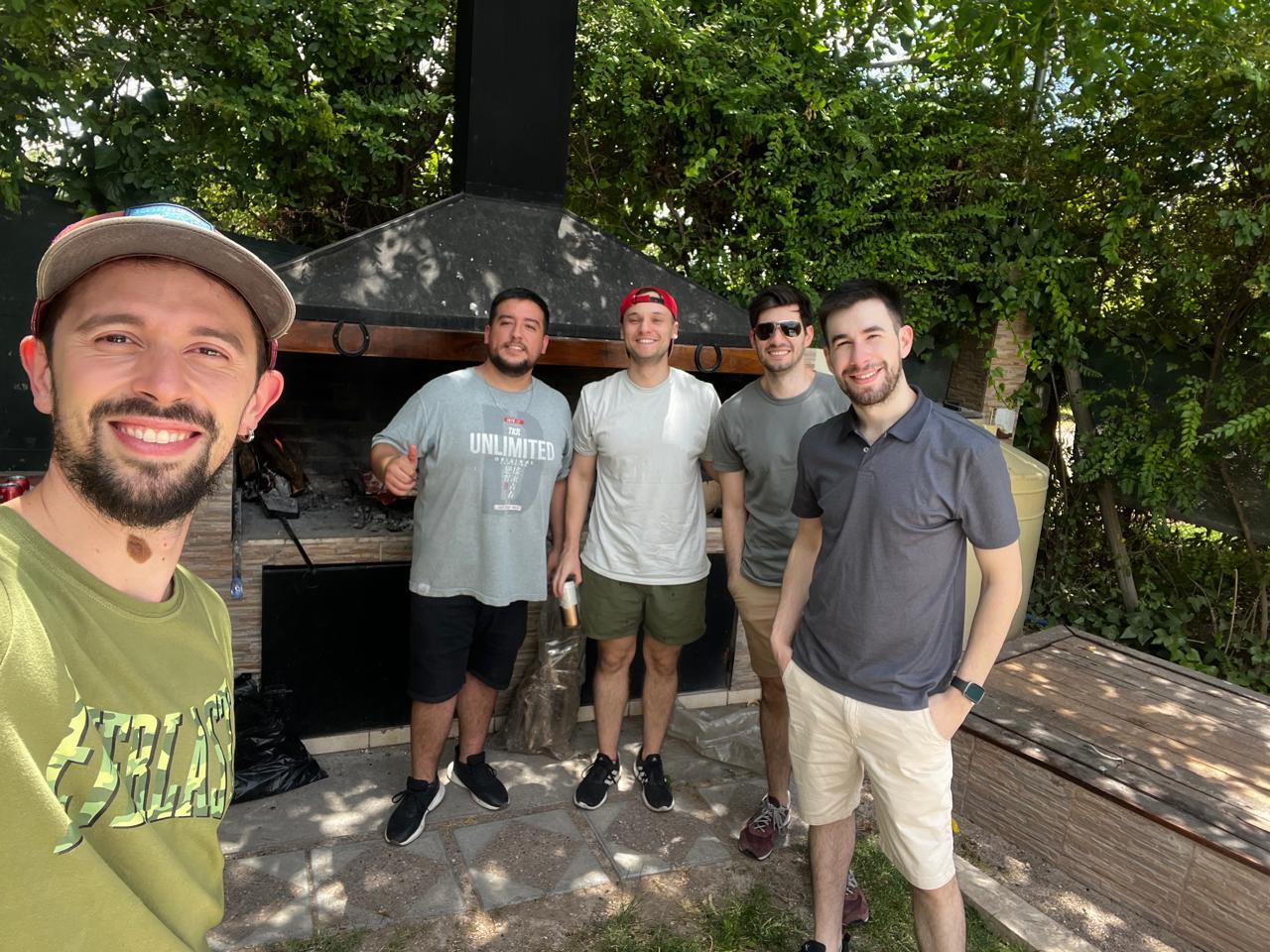
There’s a rare balance of seniority, curiosity, and openness. It’s a place where you can ask questions, learn fast, and continuously improve.
Considering a role at Marvik?
If you’re thinking about joining Marvik, here’s my honest advice:
- Be clear about what you’ve built and learned
- Show that you can think end-to-end, not just model-level
- Be comfortable with ambiguity
- Focus on delivering real business value with AI
If you enjoy solving complex problems where the solution isn’t obvious from day one, you’ll likely enjoy working here. You can explore our open positions here.
If you’re exploring a career as a Machine Learning Engineer, transitioning from another field, or curious about what real AI consulting work looks like, feel free to reach out to me on LinkedIn.
I may not have every answer, but I’ll always give you the honest one.

%20copia.webp)

.png)