%20copia.webp)
AI in Biotechnology: Accelerating Drug Discovery and Genomics



Artificial Intelligence (AI) is reshaping the biotechnology landscape, accelerating how we discover, design, and deliver life-changing therapies. From drug discovery and genomics to biomanufacturing, AI is helping biotech companies reduce costs, and speed up R&D in ways previously unimaginable.
According to a recent Fortune Business Insights report, the AI market in biotechnology was valued at USD 1.8 billion in 2023 and is projected to reach USD 13.1 billion by 2034, growing at a CAGR of 18.8 percent. This explosive growth reflects not just technological promise, but tangible, production-ready impact, exactly where companies like Marvik specialize.
This article explores the most transformative applications of AI in biotechnology, their real world business outcomes, and how organizations can unlock their full potential responsibly and efficiently.
1. Accelerating Drug Discovery and Development
Drug discovery has traditionally been a decade-long, high-cost endeavor. AI is redefining that timeline.
Machine learning (ML) models can now analyze millions of compounds and predict their biological activity, toxicity, and interactions, making experiments more timely and accurate by running a pre-filtering stage before anything reaches the lab. Since computational models can already tell which compounds are unlikely to work, teams can eliminate large volumes of candidates upfront, reducing the need for exhaustive lab testing.
Key benefits:
- Faster R&D cycles: AI accelerates every stage of the research and development process, including lead identification and optimization.
- Cost efficiency: Predictive modeling reduces failed experiments.
- Precision: Data-driven target selection increases trial success rates.
2. Genomics and Precision Medicine: Toward Truly Personalized Therapies
AI’s pattern recognition capabilities are particularly transformative in genomics, where datasets are massive and complex.
Deep learning models can analyze genomic and transcriptomic data to identify disease-linked mutations and predict treatment response. This underpins precision medicine, where therapies are tailored to a patient’s unique genetic profile.
Some companies are already using AI-driven platforms to map gene-disease relationships, informing customized oncology treatments. In clinical settings, such systems help physicians match patients to trials, predict disease progression, and personalize drug combinations.
For biopharma organizations, AI in genomics delivers:
- Higher success rates in trials through better patient stratification.
- Reduced adverse effects through more accurate targeting.
- Integration across omics, imaging, and clinical records.
By combining AI-driven genomics with explainable, production-ready models, biotech organizations can move from insight to intervention with measurable impact.
3. Biomanufacturing and Process Optimization
AI is not only revolutionizing discovery; it is transforming biomanufacturing as well.
Using predictive analytics and digital twins, biotech firms can model complex production processes, predict failures, and optimize yields in real time. Machine learning algorithms identify correlations between process variables such as pH, temperature, and nutrient flow, allowing for continuous optimization.
Generative AI is also making inroads into cell-line development and strain engineering, predicting how microbial systems will behave under different conditions before physical testing. This results in faster scale up, lower waste, and better reproducibility, which are critical factors in commercial bioproduction.
The result is more reliable, sustainable bioprocesses that scale efficiently from lab to market.
4. Lab Automation and Robotics: AI-Powered Research Workflows
While computer vision tools are already helping scientists automate tasks such as cell counting, colony detection, and quantitative measurements under the microscope, most laboratory workflows remain largely manual. Full laboratory automation, where systems independently execute, monitor, and optimize experiments end to end, remains a visionary long-term objective.
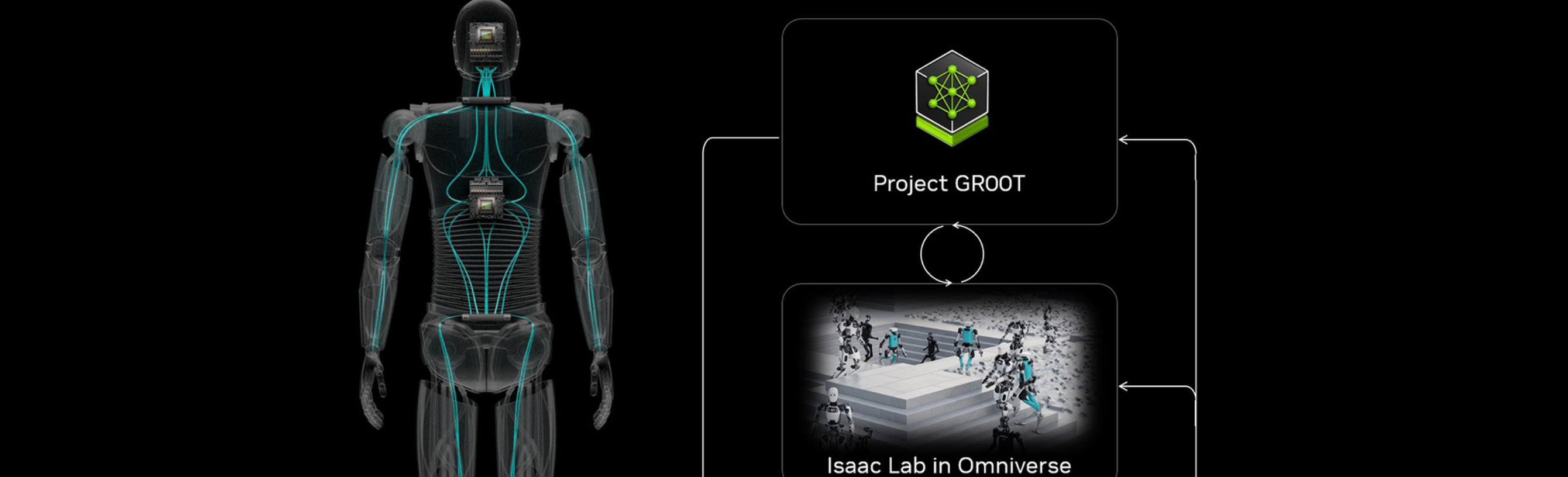
In the future, AI combined with robotics is expected to redefine how labs operate. Autonomous systems powered by machine learning could run parallel experiments, collect data in real time, and adapt protocols dynamically. Emerging concepts such as self-driving labs and AI-guided robotic assistants point toward a future in which data throughput increases significantly while precision and reproducibility remain tightly controlled.
This future synergy could enable continuous learning cycles, where experiments inform models and models guide new experiments. The result would be a smarter R&D ecosystem, faster discovery cycles, and consistent data quality across research facilities.
5. Business Impact: From Innovation to ROI
Beyond technical advancement, AI delivers measurable business impact across biotech organizations.
- Faster time-to-market: AI reduces discovery and preclinical phases by 40 to 60 percent.
- Lower operational costs: Predictive systems minimize trial failures and process inefficiencies.
- Enhanced scalability: AI enables digital twins and cloud-based platforms for global collaboration.
- Regulatory readiness: Explainable AI supports compliance and transparency requirements.
According to McKinsey & Company’s report, “The AI Frontier in Life Sciences” (2024), the adoption of AI in life sciences could generate 70 to 110 billion dollars in annual value through cost reduction and accelerated innovation. For biotech leaders, this represents not just technological evolution but a strategic advantage.
6. Responsible AI and Ethical Considerations
As AI becomes integral to biotechnology, it also raises critical ethical and regulatory questions. Issues such as data privacy, bias mitigation, and algorithmic transparency are top priorities.
Initiatives by the World Health Organization (WHO) and the European Commission have established ethical frameworks emphasizing fairness, accountability, and explainability in biomedical AI. The path forward lies in trustworthy, human-centered AI that combines technical rigor with ethical stewardship.
Use Cases in Biotechnology
One of the most significant examples of Marvik’s impact in biotechnology is our partnership with Guska, a biotech startup developing next-generation synthetic RNA oncolytic viruses to selectively attack cancer cells.
Guska faced the challenge of scaling the design of next-generation RNA oncolytic viruses across multiple tumor types while dealing with fragmented data, long R&D cycles, and the need for advanced computational methods that their internal team could not support. To unlock faster iteration and more informed scientific decisions, the company required a partner capable of building a generative platform tailored to complex biological data and early-stage pharmaceutical development.
Marvik partnered with Guska to develop an AI-powered generative design platform that centralizes genomic and experimental data, generates new viral candidates with safety and specificity features, and enables continuous learning through direct feedback from laboratory results. This collaboration is helping Guska shorten design cycles, strengthen the scientific rigor of candidate selection, and build the technical foundation needed to advance their oncolytic virus therapies toward future clinical development.
Another example is our collaboration with a rapidly growing clinical development startup that uncovered a potential therapeutic for obesity and metabolic disorders through a phenotypic approach, but must now tackle the crucial step of identifying its molecular target.This limitation in drug optimization contributes to resistance within the industry due to the inherent uncertainty. To address this challenge, Marvik proposes applying an AI-driven workflow that utilizes protein structural modeling (including structures generated by AlphaFold) and proteome-wide computational screening. This approach could accelerate the discovery process by avoiding blind experimental validation. Instead, differential docking is applied to narrow down the universe of over 20,000 proteins to a short, manageable list of high-confidence candidates for laboratory testing.
How Marvik Can Help You
The integration of AI into biotechnology is no longer a vision of the future; it is today’s competitive advantage. By enabling faster discovery, personalized medicine, efficient manufacturing, and scalable innovation, AI is redefining what is possible in life sciences.
The organizations that succeed will be those that treat AI not as an experiment but as an operational capability that delivers measurable, production-ready impact.
Marvik helps organizations turn artificial intelligence from a promising concept into measurable business outcomes. With experience delivering AI solutions across every industry, our team understands what it takes to move from experimentation to production. We have successfully deployed 200+ AI projects in production environments, from predictive analytics to multimodal deep learning, helping companies accelerate discovery, optimize operations, and scale innovation responsibly.
Our expertise in biotechnology includes building AI-powered solutions for drug discovery, genomic analysis, diagnostic imaging, and clinical data processing. Whether you’re a biotech startup developing a new molecule or a global pharmaceutical firm digitizing R&D, Marvik combines domain knowledge with advanced AI engineering to deliver results that translate directly into scientific and commercial value. As official partners of NVIDIA and Oracle, we leverage cutting-edge GPU computing and enterprise infrastructure to design scalable, secure, and high-performance AI systems ready for regulated environments.
With a team of 150+ senior AI specialists, we offer the strategic insight and technical excellence needed to build production-ready AI tailored to your organization’s goals. If you’re exploring how AI can enhance your biotech or life sciences strategy, Marvik can help you identify opportunities, define a roadmap, and build reliable AI solutions that deliver impact from day one.
Book a free 30-minute consultation to discuss your AI challenges and opportunities with our experts.

%20copia.webp)
.png)