%20copia.webp)
GTC 2026: From AI Models to Autonomous Systems



This year, I had the opportunity to attend NVIDIA GTC 2026 as part of the Marvik team.
I have followed GTC for years through announcements and recorded talks, but being there in person is fundamentally different. You do not just hear what is being announced. You see where the industry is actually investing its time, talent, and capital.
After a few days of sessions, demos, and conversations, one thing became clear. We are no longer iterating within the same paradigm. We are transitioning to a new one.
The shift: from models to systems
For the past few years, most AI conversations revolved around models. Which one to use, how to fine tune it, and how to benchmark it.That is no longer the center of gravity.
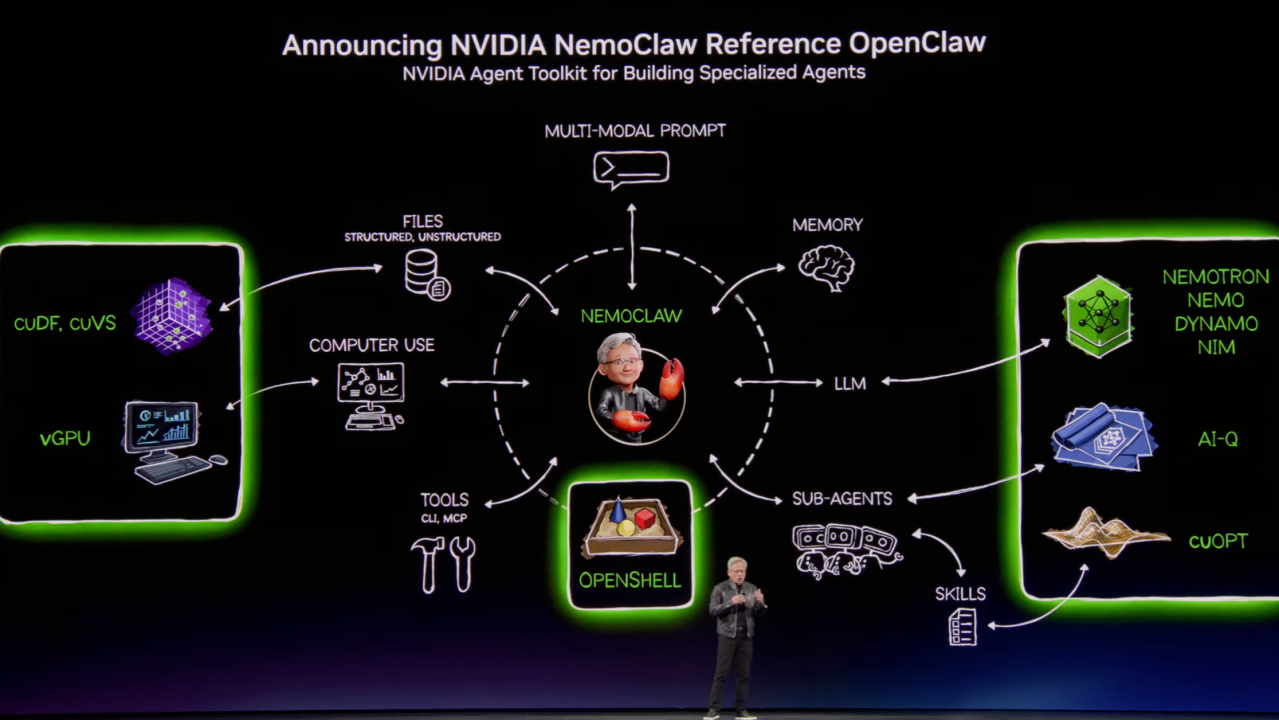
What dominated GTC was the emergence of AI systems. These are compositions of multiple agents capable of reasoning, planning, and executing tasks across tools and environments.
Frameworks like NemoClaw and OpenClaw are early signals of standardization in this space. But they are not the story. The story is what they enable.
We are starting to see software that behaves less like deterministic code and more like adaptive systems:
- Agents that decide which tools to call
- Systems that orchestrate multiple models
- Pipelines that evolve based on context
This is a fundamental shift in how software is designed.
At Marvik, this is especially relevant. Most of the systems we build already follow this pattern. They are not single model solutions, but compositions of reasoning, retrieval, orchestration, and execution.
What is changing now is that the rest of the industry is catching up and beginning to formalize it.
AI factories are becoming real
Another concept that moved from buzzword to reality is the idea of AI factories.
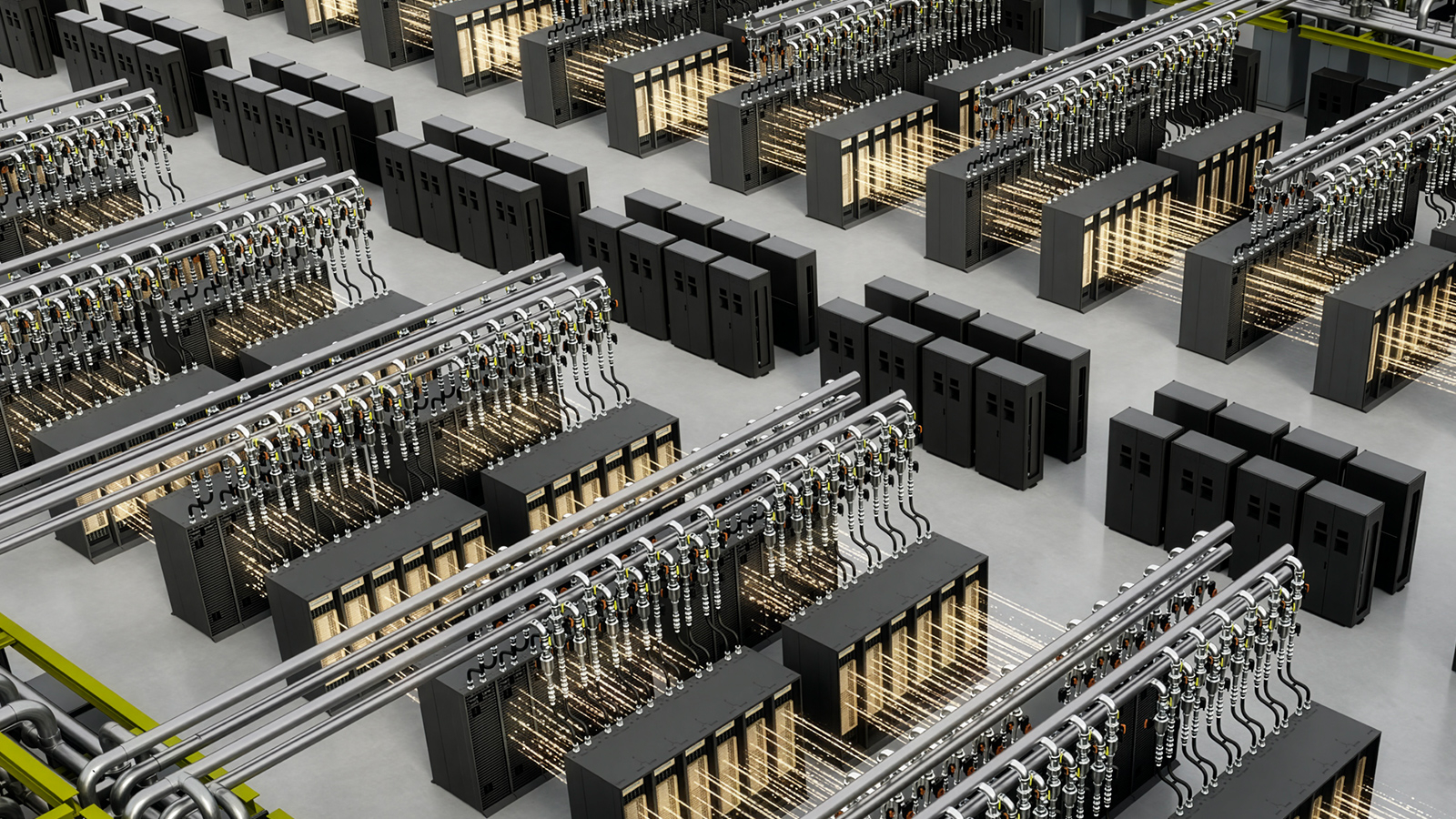
The introduction of platforms like Vera Rubin AI Factory Platform shows how deeply infrastructure is being rethought. This is not about faster GPUs in isolation. It is about designing end to end systems optimized for AI workloads.
Compute, networking, storage, and scheduling are being co designed.
More importantly, the key metric is changing.It is no longer about training throughput.
It is about inference efficiency.
Latency, cost per token, and throughput under load are now the defining constraints of production systems.
This shift has direct implications for how we design solutions:
- Model selection is constrained by serving cost
- Architecture decisions are driven by latency requirements
- Multi provider strategies become essential for cost optimization
The engineering challenge is moving from experimentation to operation.
Open models are no longer a side trend
One of the most important announcements was the formation of the NVIDIA Nemotron Coalition.
This is not just another open source effort. It is a coordinated push to make high performance open models a viable alternative to closed ecosystems.
The implications are significant.
Access to strong models is becoming commoditized. As a result, differentiation shifts elsewhere:
- Not in the model itself
- But in how it is used
- And how well it integrates with a specific domain
From a technical perspective, this raises the importance of:
- Data pipelines
- Retrieval systems
- Evaluation frameworks
- System level optimization
In other words, engineering quality becomes the bottleneck again.
Physical AI: early, but accelerating
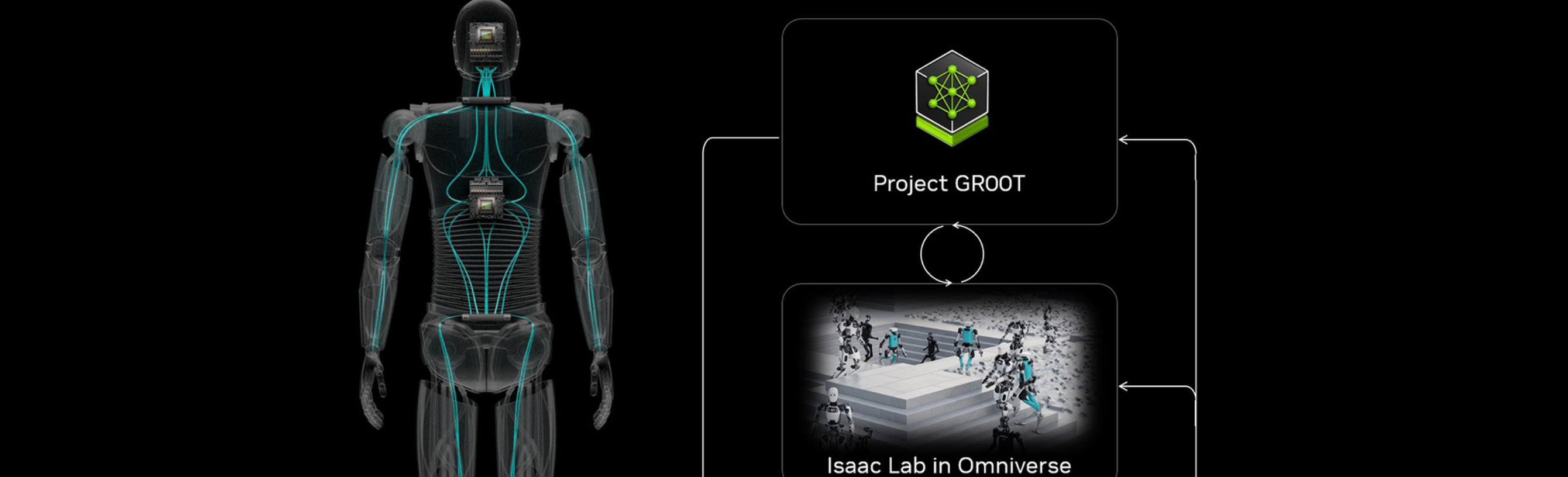
One of the most compelling areas at GTC was physical AI.
There was a strong presence of robotics, autonomous systems, and simulation platforms. What stood out was not just the hardware, but the workflow.
Simulation is becoming the default starting point:
Train in simulation.
Validate in simulation.
Then deploy to the real world.
Platforms like NVIDIA Omniverse and NVIDIA Isaac are enabling this loop with increasing fidelity.

From a systems perspective, this introduces a new layer of complexity:
- Real time constraints
- Sensor fusion
- Control systems
- Safety requirements
This is a very different problem space from traditional software, but one that is rapidly converging with AI.
The fragmentation in this space also makes it particularly well suited for custom engineering approaches.
Everyone is building products
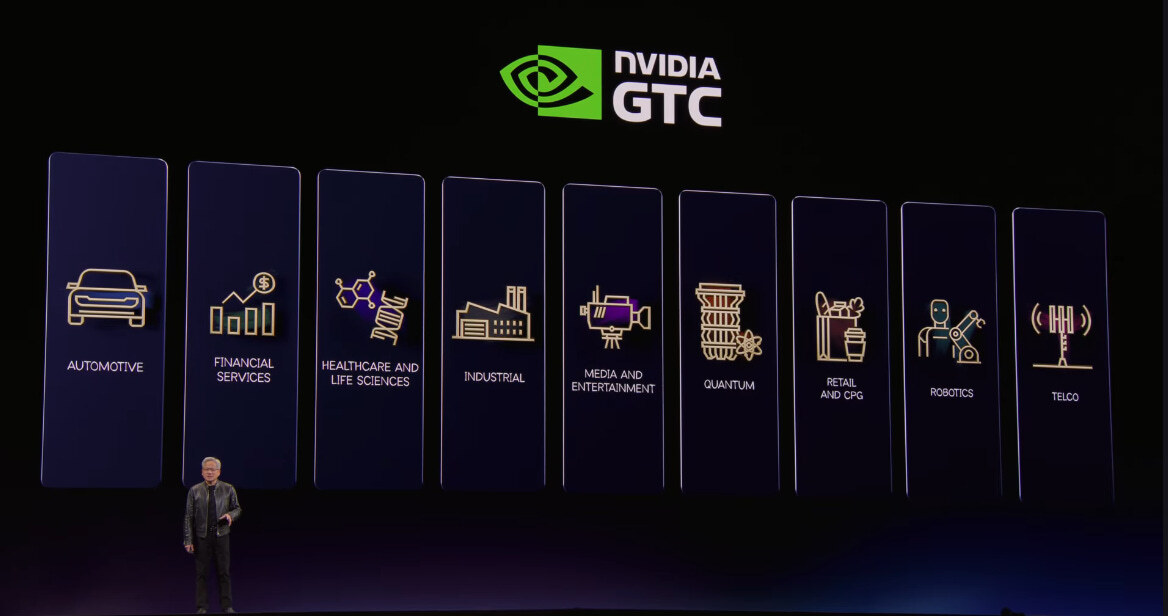
Walking through the expo floor, a pattern becomes obvious almost immediately. Almost every company is building a product: Agent platforms, voice APIs, vector databases, security layers, observability tools.
Each one solves a specific slice of the problem. Very few solve the entire system.
This creates a gap.
Real world use cases do not map cleanly to single products. They require stitching together multiple components, adapting them, and making them work reliably under real constraints.
Where Marvik fits in
Being at GTC reinforced something we see every day in our work.
Most of the industry is optimizing for scale through productization.
We are optimizing for impact through customization.
That leads to a different kind of leverage:
- We are not tied to a single stack
- We can combine tools across the ecosystem
- We can adapt solutions to specific business contexts
One interesting observation is that many startups in the NVIDIA Inception ecosystem are building products that resemble solutions we have already implemented as custom systems.That is not a coincidence.Custom solutions are often where new product categories originate.
The next phase of AI engineering
If I had to summarize the direction the industry is heading, it would be this:
- Models are becoming interchangeable
- Infrastructure is becoming standardized
- Systems are becoming the primary challenge
And systems are inherently messy.
They involve trade offs, constraints, and domain knowledge that cannot be fully abstracted away.
That is where engineering matters most.
Final thoughts
GTC 2026 made one thing clear.
AI is no longer a differentiator on its own. It is becoming an expectation.
The real differentiation is shifting to execution:
- How well systems are designed
- How efficiently they operate
- How deeply they integrate with real world problems
That is where things start to get interesting.
And it is exactly the kind of work we want to be doing.
%20copia.webp)
.png)